
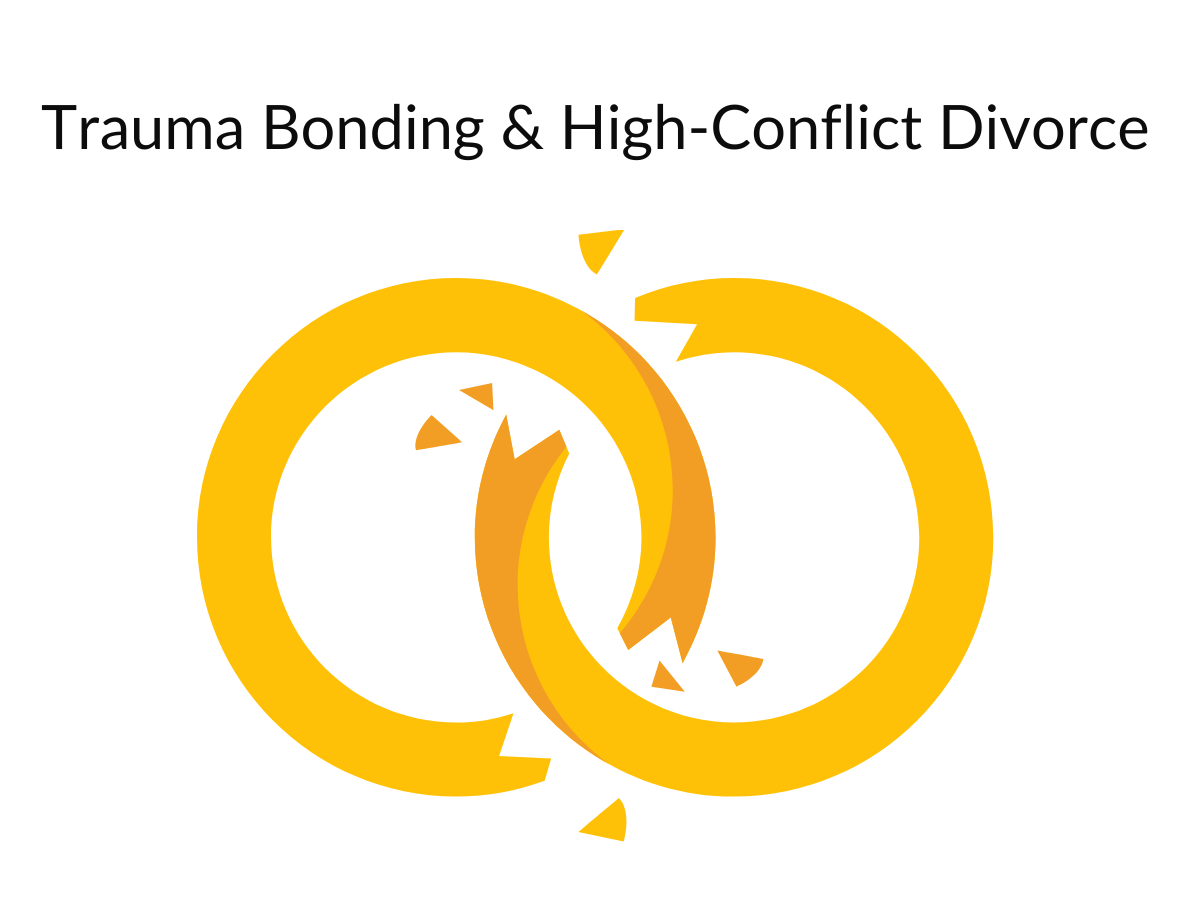

Leaving a high-conflict relationship should feel like relief, but for many, it doesn’t. Instead, you may find yourself doubting your decision, reminiscing about ‘the good times,’ or even feeling a strange pull to return. If this sounds familiar, you’re not alone. Trauma bonding in high-conflict divorce—a psychological attachment formed through cycles of abuse and intermittent reinforcement—can make it incredibly difficult to break free. This article explores how trauma bonding manifests in high-conflict divorce and, most importantly, how to start healing.
What Is Trauma Bonding?
Trauma bonding is a psychological response that occurs in relationships where cycles of abuse are interspersed with moments of kindness or affection. The brain releases oxytocin, the so-called ‘bonding hormone,’ during positive moments, reinforcing emotional attachment despite ongoing harm. This creates a push-pull dynamic where victims feel trapped, experiencing both fear and dependence on their abuser. Trauma bonding in high-conflict divorce makes leaving even more challenging due to the legal and emotional entanglements involved.
Trauma bonds develop over time and are reinforced by unpredictable reinforcement. This means the victim never knows when they will receive kindness or cruelty, making it difficult to break free. The psychological impact of this bond is significant, leading to self-doubt, low self-esteem, and a sense of learned helplessness. Even when a person logically knows they should leave, their emotional attachment keeps them stuck.
Why Is It So Hard to Leave?
- Intermittent Reinforcement: Moments of kindness make you question whether things are really ‘that bad.’
- Cognitive Dissonance: Your brain struggles to reconcile the person who causes you pain with the one who once showed love.
- Survival Responses: Fear of retaliation, financial instability, or losing access to children can make leaving feel impossible.
- Fear of Being Alone: Many victims have been conditioned to believe they won’t survive without their abuser.
- Trauma Repetition: If someone has experienced childhood trauma, they may unconsciously seek familiar relationship patterns, even if those patterns are harmful.
How Trauma Bonds Affect Separation & Divorce
Even after making the decision to leave, trauma bonds can show up in unexpected ways:
- Doubting the Process: Feeling tempted to withdraw legal action or mediation efforts.
- Getting Pulled Back In: Responding to love-bombing attempts, guilt-tripping, or promises to ‘change.’
- Struggling with Boundaries: Finding it hard to enforce no-contact or low-contact rules.
- Emotional Exhaustion: The mental toll of navigating legal and emotional separation can weaken resolve.
- Financial Manipulation: Abusive ex-partners may use financial control to keep their victim tied to them.
Need guidance? Reach out here to discuss strategies for breaking free from trauma bonds.
The Impact on Children
If you share children with your ex, trauma bonding can add another layer of complexity. Children may also struggle with mixed emotions, feeling torn between parents. Supporting them means:
- Validating their experience without directly criticising the other parent.
- Providing consistency even when the other parent does not.
- Helping them regulate emotions rather than absorbing the conflict.
- Encouraging Open Dialogue: Allow children to express their feelings without fear of judgement.
- Setting Healthy Boundaries: Protecting your child from manipulation while maintaining a sense of security.
Children who experience high-conflict divorces are at risk of repeating trauma bonds in their own future relationships. Teaching them to recognise healthy versus unhealthy dynamics is crucial in breaking the cycle of trauma.
Breaking Free: Steps Toward Healing
- Awareness: Recognising trauma bonding in high-conflict divorce is the first step.
- Journaling: Track patterns of behaviour and your emotional responses.
- Dropping Anchor Exercise: A grounding technique to regain control when triggered.
- Therapeutic Support: Working with a trauma-informed therapist can help rewire these deep-seated patterns.
- Education: Reading about trauma bonding and understanding its effects can empower you to make informed choices. Dr Ramani has lots of great resources too.
- Support Groups: Connecting with others who have been through similar experiences can provide emotional validation.
- Practical Safety Planning: Having a clear plan for emotional and financial security can ease the fear of leaving.
If you’re ready to start your healing journey, book a session with me today.
Healing from trauma bonding in high-conflict divorce takes time, but every small step counts. It’s important to remember that breaking free is not just about leaving physically—it’s about undoing the emotional conditioning that keeps you tied to the cycle. With the right support, knowledge, and strategies, you can regain your independence and rebuild a life free from toxic dynamics. If this article resonated with you, consider seeking professional support. You don’t have to do this alone.

0 Comments